
Water Ingress and the Rise of Section 106(5) Claims: What Owners Corporations Need to Know
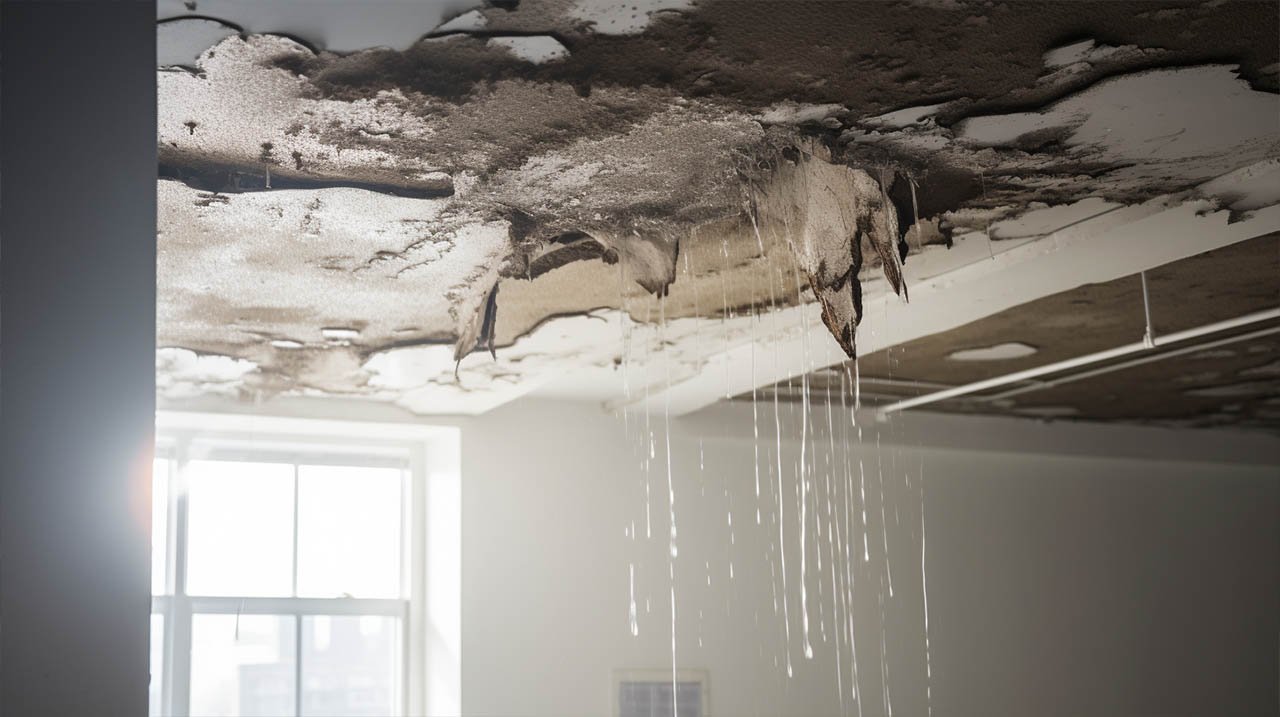
Leaking roofs, failed waterproofing membranes, defective balconies, deteriorated windows and façades, blocked drainage systems and other common property defects can quickly result in water entering individual lots.
For an owners corporation, however, the cost may extend well beyond simply repairing the source of the leak.
Increasingly, lot owners affected by water ingress are seeking compensation from owners corporations under section 106(5) of the Strata Schemes Management Act 2015 (NSW) (SSMA).
These claims can include loss of rent, alternative accommodation, damage to flooring and contents, mould remediation and, in some circumstances, compensation for loss of amenity.
With the limitation period for section 106(5) claims having increased from two years to six years from 1 July 2025, the potential exposure for owners corporations has become even more significant.
So, when an owner presents an owners corporation with a substantial compensation claim following water ingress, what should the owners corporation do?
The starting point: section 106
Section(1) of the SSMA imposes an obligation on an owners corporation to properly maintain and keep the common property in a state of good and serviceable repair.
Section 106(2) separately requires the owners corporation to renew or replace fixtures and fittings forming part of the common property where required.
Importantly, section 106(5) provides a statutory right to damages. A lot owner may recover from the owners corporation any reasonably foreseeable loss suffered as a result of the owners corporation’s contravention of section 106.
The obligation to maintain common property is therefore one thing. The financial consequences of failing to do so can be another.
A leaking common property roof might cost $30,000 to repair. But if an owners corporation allows the problem to continue for an extended period and a lot becomes uninhabitable, the consequential claim for lost rent, temporary accommodation and damage to the lot could potentially exceed the cost of the common property repairs themselves.
Recent cases demonstrate that this is a very real risk.
water ingress does not automatically equal compensation
One of the most important distinctions for an owners corporation to understand is that the occurrence of water ingress does not, by itself, mean that the owners corporation must pay whatever compensation the owner demands.
A section 106(5) claim requires more than evidence that water entered the lot.
There are several separate questions that should be considered:
1. What caused the water ingress?
The first step is identifying the source.
- Is the water entering through common property?
- Is it associated with lot property?
- Has an owner’s renovation affected waterproofing or drainage?
- Is there an exclusive use or common property rights by-law which changes responsibility for maintenance?
Obtaining appropriate expert evidence at an early stage can be critical.
2. What losses are the owners claiming?
Claims arising from water ingress commonly include:
- loss of or reduced rental income;
- alternative accommodation costs;
- damage to common property inside the lot such as flooring, or other lot property;
- mould investigation and remediation costs; or
- cleaning and storage expenses.
In The Owners – Strata Plan No 55468 v Silberstein [2025] NSWCATAP 102, the dispute arose from significant water ingress affecting a Sydney penthouse.
The underlying proceedings resulted in an award exceeding $300,000, including substantial temporary accommodation costs and an amount for loss of amenity.
The case is an important reminder that prolonged failure to resolve water ingress can transform what began as a maintenance problem into a substantial damages claim.
3. Has the owner mitigated their loss?
A particularly important principle when negotiating section 106(5) claims is mitigation. A claimant cannot simply allow losses to accumulate indefinitely where reasonable steps could have been taken to reduce those losses.
For example:
- Could the owner have accepted reasonable temporary works?
- Could furniture have been moved rather than replaced?
- Could part of the apartment continue to be occupied?
- Could the property have been rented at a reduced rate rather than remaining vacant altogether?
Each case turns on its own facts, but mitigation should form part of the owners corporation’s assessment or defence of any substantial claim.
4. Is the owner within the limitation period?
Owners corporations should also be aware of an important legislative change.
From 1 July 2025, section 106(6) was amended to extend the limitation period for section 106 claims from two years to six years after the owner first becomes aware of the loss.
The amendment significantly increases the potential period of exposure for owners corporations.
Importantly, however, the District Court held in John Goubran & Associates Pty Ltd v The Owners – Strata Plan 57150 [2026] NSWDC 9 that the amendment does not retrospectively revive a section 106(5) claim that had already become statute-barred under the former two-year limitation period.
Limitation issues should therefore be considered carefully whenever an owners corporation receives a historical claim.
the takeaway for owners corporations
Section 106(5) claims should no longer be viewed as an unusual consequence of a major building defect.
Water ingress disputes are increasingly accompanied by claims for substantial consequential losses.
The extension of the limitation period to six years, together with decisions recognising claims for matters including loss of rent, temporary accommodation and loss of amenity, means owners corporations need to approach these disputes carefully.
The key is to act quickly on the defect, but carefully on the damages claim.
Repairing common property promptly may stop the loss from increasing. When compensation is claimed, however, owners corporations should investigate the claim rather than simply accepting the amount demanded.
Finally, be careful about admissions. Correspondence following a water ingress event can later become important evidence. Statements such as: “We accept responsibility for all damage caused by the leak” may have consequences well beyond authorising the repair of common property.
There is an important distinction between an owners corporation acknowledging its responsibility to investigate and repair common property and admitting legal liability for every consequential loss claimed by an owner.
KEY TAKEAWAYS
- Act quickly on the defect, but carefully on the damages claim.
- Repairing common property promptly may prevent loss from increasing.
- Investigate the compensation claims rather than simply accepting the amount demanded.
- Be careful about admissions. Distinguish between acknowledging responsibility and admitting legal liability.
Get in touch with Vinc Legal today for specialist Strata Law advice!
Strata Law is a niche area, this is why choosing a strata specialist law firm is vital for obtaining cost-effective advice and resolution of your legal problems.
If you have questions about strata law or need assistance with a specific issue, please do not hesitate to reach out. We are here to help you every step of the way.
Alternatively, you can fill out the form below, and we will get back to you as soon as possible.